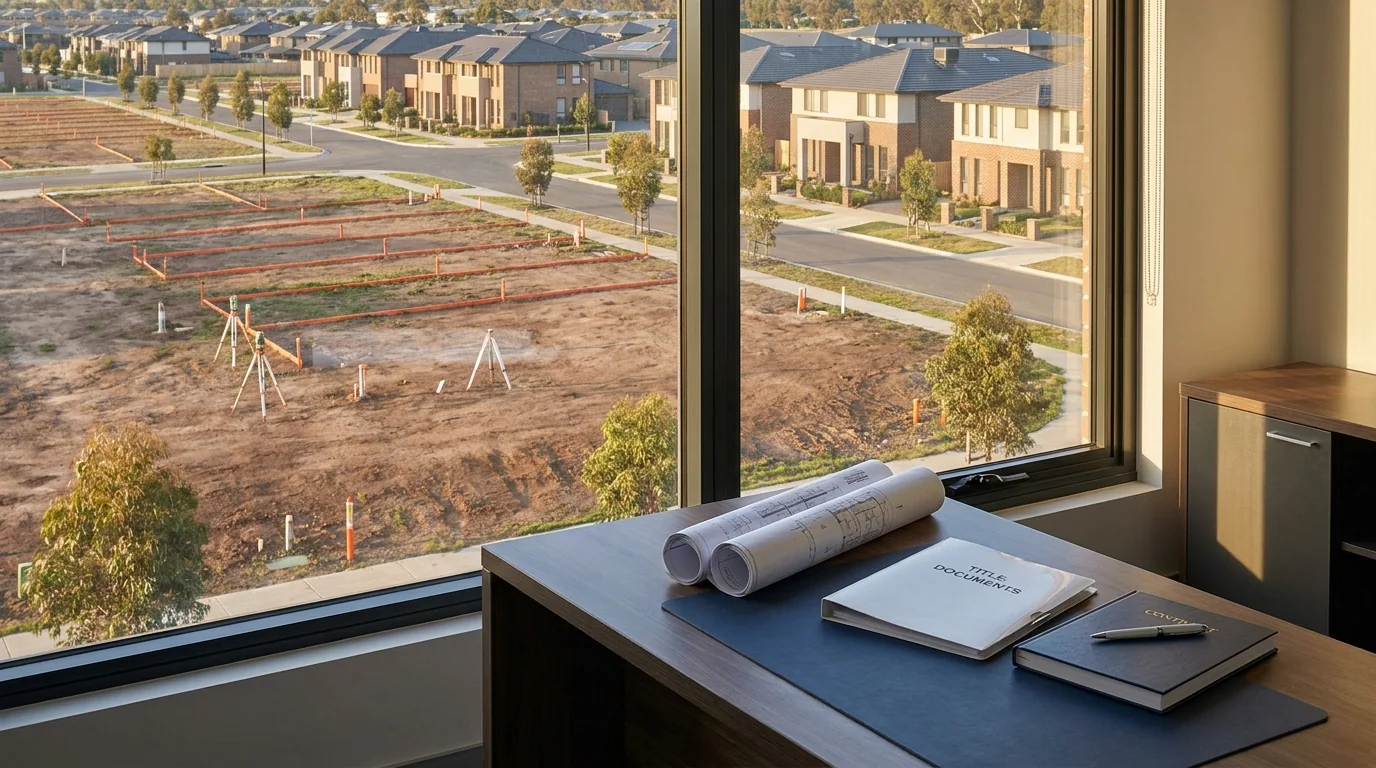
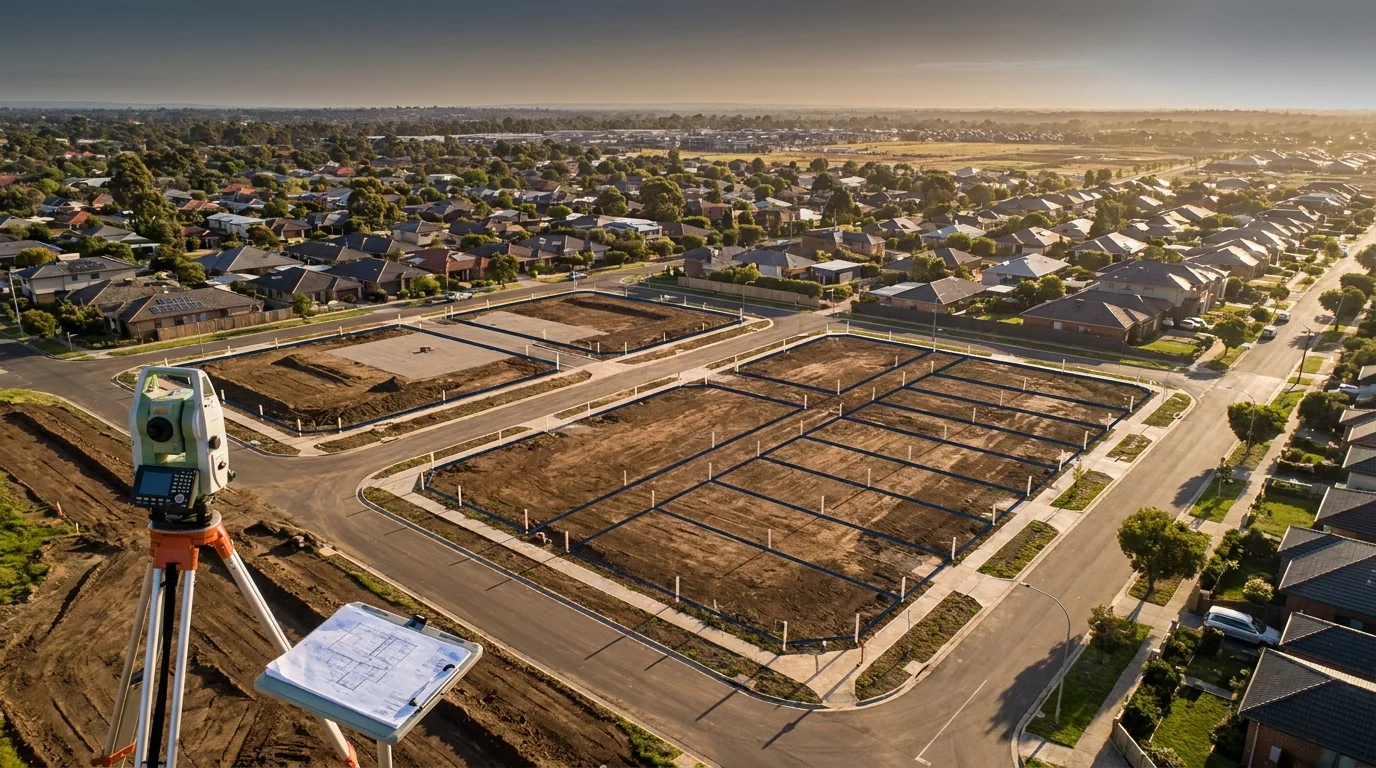
Melbourne property owners often assume that the fences surrounding their land represent the legal boundaries. In practice, fences in older suburbs like Preston, Northcote, or Footscray are frequently misplaced by several hundred millimetres. While a few centimetres might seem minor, these discrepancies become a major obstacle when you decide to subdivide. A subdivision lawyer in Melbourne sees these issues daily, usually when a licensed land surveyor produces a plan of survey that does not match the occupation on the ground.
When you are planning a development, whether it is a backyard dual occupancy or a multi-unit project, your title must be accurate. If your fence is inside your title boundary, you are losing land. If your fence is outside your title boundary, you are encroaching on your neighbour. Both scenarios can halt title registration at Land Use Victoria. Resolving these conflicts requires a clear understanding of the Subdivision Act 1988 and the Transfer of Land Act 1958.
The 15-Year Rule in Victoria
Victoria has specific laws regarding adverse possession. If you or previous owners have occupied a piece of land for at least 15 years, you may have a legal right to claim that land. This occupation must be continuous, open, and without the permission of the actual title holder. It is not just about moving a fence. You must demonstrate that you have excluded others from the land, typically through fencing, gates, or building structures.
The 15-year period does not have to be completed by a single owner. You can "tack" your period of occupation onto the period of the person who owned the property before you. If the previous owner occupied the disputed strip for 10 years and you have been there for five, the 15-year requirement is met. This is why we often prepare a Deed of Transfer of Possessory Rights during a property sale. This document ensures the time accumulated by the vendor is legally passed to the purchaser.
There are limits to these claims. You cannot claim adverse possession against the Crown, Victorian Rail Track (VicTrack), or water authorities. Claims against local councils are generally prohibited as well. If your development site borders a council laneway or a park, you cannot simply move the fence and claim the land after 15 years. In those cases, you may need to negotiate a direct land purchase from the council.
Boundary Realignment as a Practical Alternative
Adverse possession is a litigious and expensive path. It involves gathering statutory declarations from long term neighbours, historical aerial photographs, and detailed survey evidence. For many developers, a Boundary Realignment is a more efficient way to fix the problem. This process involves moving the title boundary to match the existing fence line via a plan of subdivision.
A realignment requires the consent of your neighbour. If both parties agree that the fence is the practical boundary and want the titles to reflect reality, we can work with your surveyor to prepare a plan under the Subdivision Act 1988 and ensure compliance with the Planning and Environment Act 1987. This is often done as part of a larger project, such as a dual occupancy subdivision. By fixing the boundary at the start, you avoid the risk of a neighbour objecting to your planning permit later based on a boundary dispute.
If the neighbour does not agree, the situation becomes more complex. We may need to issue a formal notice to the neighbour to regain possession of your land or start the process of a formal adverse possession claim at Land Use Victoria. These steps should be taken before you start construction. Building a townhouse that encroaches on a neighbour's title by even 50 millimetres can lead to an injunction, stopping your project entirely.
Evidence and the Role of the Surveyor
Your licensed land surveyor is the first person to identify a boundary conflict. They will perform a "re-establishment survey" to locate the title boundaries relative to the fences. If there is a discrepancy, they will notify you. As lawyers, we take that survey data and determine the appropriate legal strategy.
Evidence for a claim often includes:
- Statutory declarations from people who have known the land for decades.
- Photographs showing the age and condition of the fences.
- Invoices for fence repairs or landscaping on the disputed land.
- Council records or historical building permits.
This evidence is submitted to Land Use Victoria as part of an application under Section 60 of the Transfer of Land Act 1958. The goal is to have the Registrar of Titles issue a new title that matches the fenced boundaries. This is a common requirement for developers who need a clean title before they can secure bank consents for their subdivision.
Managing Boundary Conflicts in New Developments
For small developers, boundary conflicts often arise during the planning permit stage, which is governed by the Planning and Environment Act 1987. A neighbour might realise for the first time that their garage is actually on your land. Or, you might find that the driveway width required by your permit is not achievable because the fence is in the wrong spot.
In these situations, speed is essential. We use the SPEAR (Surveying and Planning through Electronic Applications and Referrals) system to handle the lodgement of plans and documents with councils and the Land Registry. This system allows for faster communication between our firm, the surveyor, and the council. It helps us track the progress of your application and respond to any requisitions from the Registrar of Titles without the delays associated with paper lodgements.
You should also be aware of any restrictive covenants that might affect the land. Sometimes, a covenant or an easement is tied to the original title boundary. If you move that boundary through adverse possession or realignment, the location of the easement needs to be reviewed. The Victorian Law Reform Commission has provided a government report on how these interests should be managed, but the practical application remains complex.
The Impact on Off-the-Plan Sales
If you are selling units off-the-plan, your contract of sale must include a proposed plan of subdivision. If that plan is based on an incorrect boundary, you may have trouble later. If the final registered plan differs from the proposed plan in a way that materially affects the lot, the purchaser may have a right to rescind the contract.
Fixing boundary issues before you sign contracts is the most prudent approach. It ensures that the area of the land you are selling is exactly what you can deliver. If you discover a boundary issue after you have already sold units off-the-plan, you must act quickly to rectify the title before you reach the title registration stage. Any delay in registration can lead to "sunset clause" issues. Under the Sale of Land Amendment Act 2019, while purchasers may still walk away if the plan is not registered by a certain date, vendors can no longer rescind these contracts without purchaser consent or an order from the Supreme Court.
Costs and Timeframes
Resolving a boundary dispute is not an instant process. A simple realignment where everyone agrees might take a few months to process through council and the Land Registry. A contested adverse possession claim can take a year or more.
Costs vary depending on the complexity. A preliminary review and letter of advice usually cost around $550 plus search fees. If we need to proceed with a full adverse possession claim, professional fees typically start from $4,400. This does not include surveyor fees or Land Use Victoria lodgement fees. While these costs seem high, they are often a fraction of the value of the land being claimed or the cost of a delayed development project.
We work closely with your town planner and surveyor to ensure that any boundary adjustments are integrated into your subdivision application. This coordinated approach prevents the different parts of your project from working against each other. For example, we ensure that a boundary realignment does not accidentally create a breach of a planning permit condition or a building regulation regarding setbacks.
This information is general in nature. Contact us for advice specific to your project. We can review your survey documents and provide a clear path forward to ensure your subdivision stays on track. Whether you are dealing with a fence that is 100 millimetres out of place or a neighbour who has built over the line, we have the experience to resolve the matter and get your titles registered.