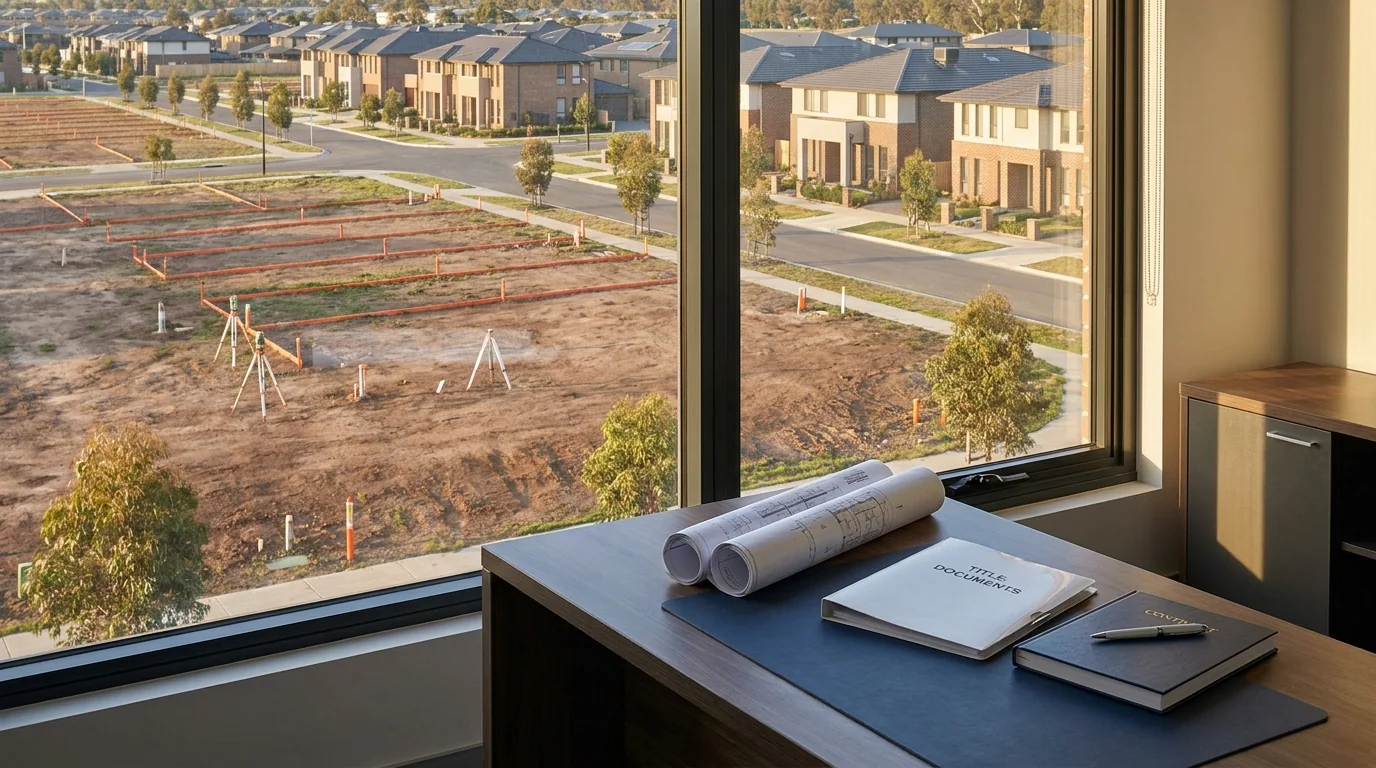
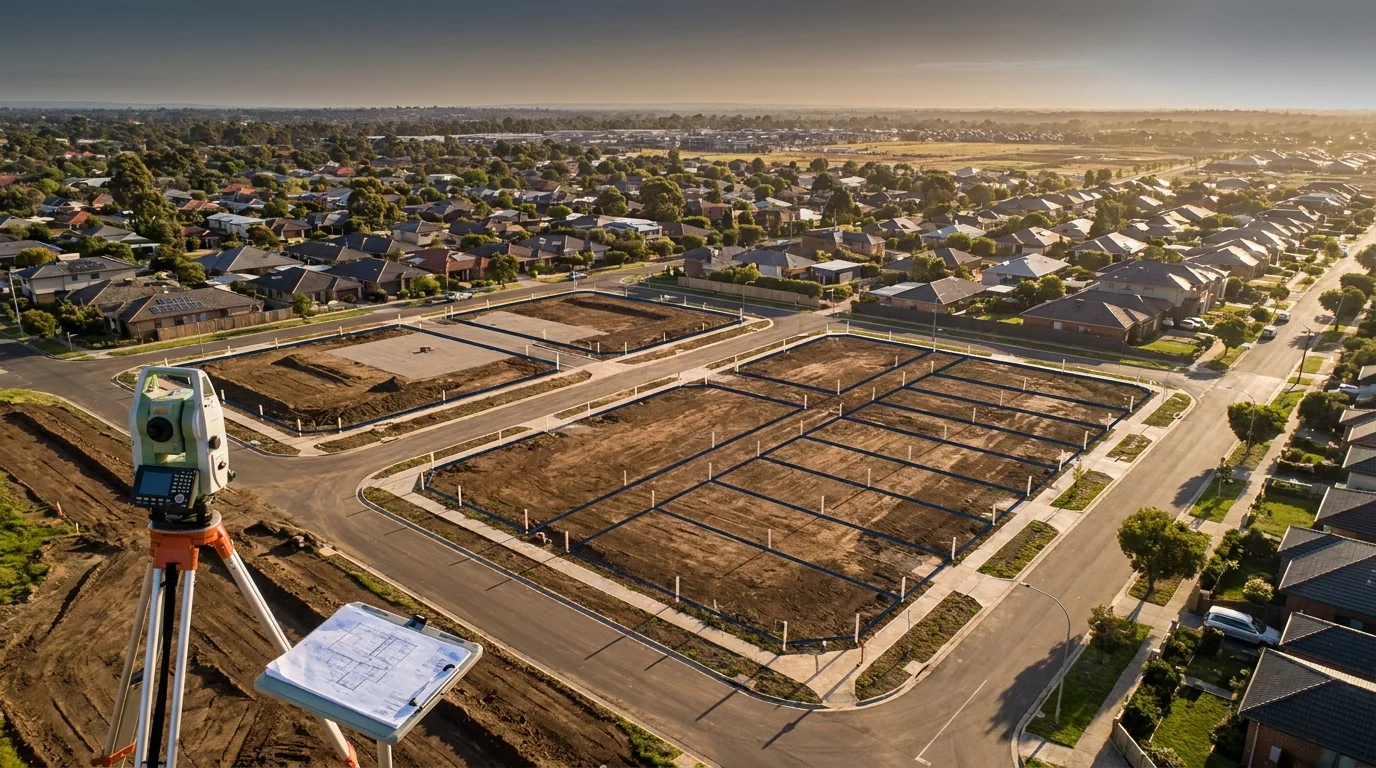
A SPEAR application lawyer in Victoria will tell you the same thing: the bank consent stage trips up more subdivisions than planning permit conditions ever do. Your surveyor has lodged the plan, council has certified it, and you have your Statement of Compliance in hand. Everything looks ready to register. Then your lender asks for documents you did not expect, requests valuations you thought were unnecessary, or simply takes three weeks to respond to emails.
We see this pattern repeatedly. Developers budget time for council approvals and servicing authority requirements but assume the bank will sign off quickly once everything else is done. That assumption costs time and money.
How the SPEAR System Handles Mortgages and Encumbrances
The SPEAR system (Surveying and Planning through Electronic Applications and Referrals) is the online platform through which all subdivision applications in Victoria are lodged, managed, and registered. When your surveyor creates the application, SPEAR automatically identifies any registered interests on the parent title, including mortgages, caveats, and easements.
Each of these interests must be dealt with before registration can occur. For mortgages, this means obtaining your lender's formal consent. The bank needs to confirm whether the mortgage will:
- Continue over all new lots
- Be released from one or more lots
- Be discharged entirely
SPEAR tracks these consents electronically. Your surveyor can see which parties have responded and which are outstanding. But SPEAR cannot make your bank respond faster or accept incomplete documentation.
What Banks Actually Want Before They Consent
Bank requirements vary, but most lenders follow a similar pattern. They want to understand what happens to their security after the subdivision registers.
If you are keeping all lots and the mortgage will continue over each one, the process is usually straightforward. The bank confirms the mortgage will apply to each new title, and consent follows within a week or two.
Complications arise when you plan to sell one or more lots. The bank needs to know:
- Which lots will be sold and which retained
- The expected sale price or current valuation of each lot
- How sale proceeds will be applied to the loan
- Whether remaining security is adequate for the ongoing debt
Most banks require independent valuations of the proposed lots. These cannot be desktop valuations or real estate agent appraisals. The bank wants a registered valuer's report, often from their own panel of approved valuers. Ordering these valuations takes time, and the reports themselves may take 10 to 14 days.
Section 173 Agreements and Bank Concerns
If your planning permit requires a Section 173 agreement (under the Planning and Environment Act 1987), your bank will want to review it before consenting. These agreements run with the land and bind future owners, so lenders pay attention to what obligations they create.
Common Section 173 requirements include development staging, landscaping maintenance, or restrictions on further subdivision. Banks generally accept these conditions, but they want to see the final agreement before signing off.
We prepare Section 173 agreements as part of our subdivision work and can provide drafts to your lender early in the process. This avoids the situation where council has signed the agreement but your bank is still reviewing it.
Timing Your Bank Consent Request
The worst time to approach your bank is after council issues the Statement of Compliance. By then, you are ready to register and every day of delay costs money, particularly if you have presold lots or have settlement deadlines approaching.
We recommend contacting your lender as soon as the plan is certified. Certification means council has approved the plan itself. The Statement of Compliance comes later, once all permit conditions are satisfied. Using the gap between certification and compliance to arrange bank requirements saves weeks.
Your lender's subdivision or security team (different banks use different names) can tell you exactly what they need. Get this in writing. Banks sometimes change their requirements or different staff give different answers. A written list protects you if there are disputes later.
When Your Lawyer Needs to Register the Plan of Subdivision
Once all consents are in place, the plan moves to registration. Land Use Victoria processes registrations through SPEAR, and according to their publications on registration activity, processing times vary depending on complexity and current workloads.
To register a plan of subdivision, your lawyer needs:
- Certified plan of subdivision
- Statement of Compliance from council
- All referral authority consents (water, electricity, drainage)
- Bank consent or mortgage discharge
- Any required Section 173 agreement, executed and ready for registration
- Fees for registration
If any document is missing or incorrectly prepared, Land Use Victoria will requisition the application. This means sending it back for correction, adding days or weeks to the timeline.
Coordinating Multiple Parties Through SPEAR
A typical subdivision involves your surveyor, town planner, council, multiple servicing authorities, your bank, and your lawyer. The SPEAR system brings these parties onto a single platform, but someone still needs to coordinate the process.
Your surveyor manages the technical aspects: preparing the plan, lodging it through SPEAR, and responding to council's surveying requirements. Your planner handles the planning permit application and any amendments. We handle the legal components: bank liaison, Section 173 agreements, dealing with easements or covenants, and final registration.
Problems occur when no one is tracking the overall timeline. Your surveyor might assume the bank consent is sorted. Your bank might be waiting for a document your surveyor thought you would provide. Meanwhile, your Statement of Compliance sits ready to register.
Common Bank Consent Problems and How to Avoid Them
Problem: Bank requires partial debt repayment before releasing a lot.
This happens when the bank calculates that selling one lot reduces their security below acceptable levels. If you are selling a rear lot worth $400,000 but your loan is $900,000 secured against a property now worth $1.1 million, the bank may want some of that $400,000 applied to the loan, not just released to you.
Solution: Discuss this with your lender before you commit to sale contracts. Know what portion of sale proceeds the bank will require.
Problem: Bank's valuation comes in lower than expected.
The bank's valuer assesses the new lots conservatively. Your expected $500,000 lot is valued at $420,000. Now the bank's security calculations do not work, and they want additional funds or security.
Solution: Get your own valuation early. If there is a gap between your expectations and likely bank valuations, address it before you need the consent.
Problem: Wrong department at the bank, slow responses.
Large banks have separate teams for standard mortgages, construction loans, and commercial lending. Your request might sit with the wrong team for weeks before being redirected.
Solution: Ask your bank specifically who handles subdivision consents. Get a direct contact name and email. Follow up in writing so there is a record.
What We Do as Your Subdivision Lawyer
We handle the legal steps from certification through to registration. This includes preparing formal requests to your bank, providing undertakings where required, drafting and negotiating Section 173 agreements, and lodging the final documents through SPEAR for registration.
We work with your surveyor, who remains responsible for the plan itself and the technical SPEAR lodgement. We work with your planner if permit amendments are needed. And we work with your bank's security team to get consent without unnecessary delays.
This information is general in nature. Contact us for advice specific to your project.