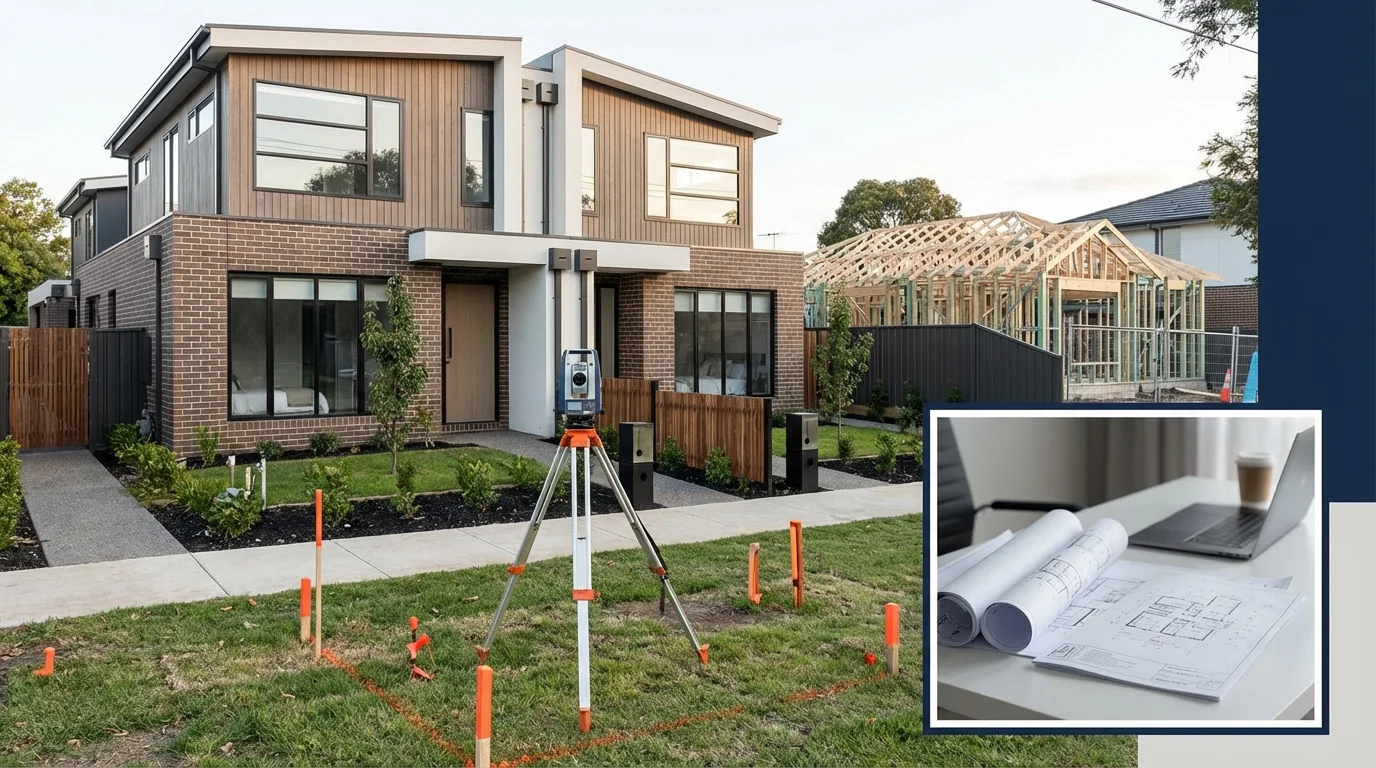
Owners Corporation Setup for Melbourne Subdivisions

Body corporate subdivision lawyers who draft OC rules, define common property, and register your plan.

Why Your Subdivision Needs an Owners Corporation

When your subdivision includes shared driveways, common walls, or joint services, Victorian law requires an Owners Corporation. This body corporate structure governs how lot owners share costs, maintain common property, and resolve disputes. Getting the rules right from the start prevents years of conflict between neighbours.

As a subdivision lawyer in Melbourne, we prepare Owners Corporation rules that match your development's actual needs. A two-lot dual occupancy with a shared driveway requires different rules than a 20-unit apartment complex. We draft practical documents that work for your specific situation, then lodge everything through the SPEAR system for title registration.

Our property development law team handles body corporate subdivisions across Victoria. We work alongside your surveyor to identify common property areas, prepare the necessary documentation, and coordinate with Land Use Victoria for registration.

Need Owners Corporation Rules for Your Subdivision?

We'll draft rules that suit your development and handle the registration process.

Our Owners Corporation Services

Complete legal support for body corporate subdivisions in Victoria

Lawyer drafting Owners Corporation rules

Owners Corporation Rules Drafting

We prepare rules that govern lot owner responsibilities, common property maintenance, and fee contributions. Standard rules work for simple developments. Complex projects benefit from customised rules addressing specific issues like parking allocation, pet policies, or renovation approvals. Your rules become part of the registered plan of subdivision.

Plan of subdivision highlighting common property areas

Common Property Definition

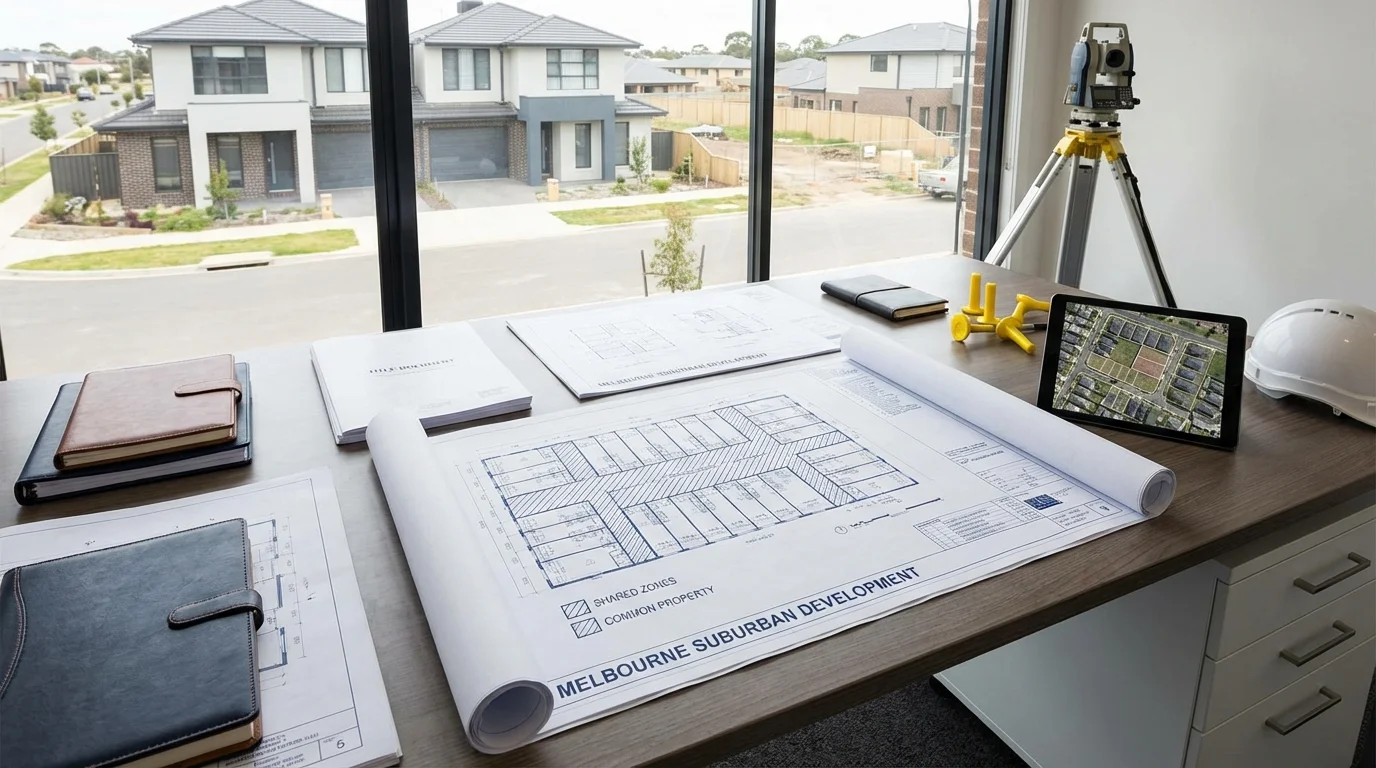
Shared driveways, visitor parking, garden areas, and service infrastructure all require careful definition on your plan of subdivision. We work with your surveyor to identify what should be common property versus individual lot ownership. Clear boundaries prevent disputes and simplify future sales.

Dual occupancy development requiring limited owners corporation

Limited Owners Corporation Setup

Many dual occupancy and townhouse developments only need a limited Owners Corporation covering the shared driveway or services. This reduces ongoing administration compared to full body corporate structures. We advise whether a limited or unlimited OC suits your development and prepare the appropriate documentation.

The Body Corporate Subdivision Process in Victoria

Understanding When You Need an Owners Corporation

Not every subdivision requires a body corporate. If your lots have no shared infrastructure, you can register without an Owners Corporation. But the moment you have a common driveway, shared retaining wall, or joint stormwater system, Victorian law mandates an OC structure.

Council planning permits often require Owners Corporation setup as a condition of approval. Your permit might specify that common property be maintained by an OC, or that certain rules apply to all lot owners. We review your permit conditions and ensure compliance.

Choosing the Right Owners Corporation Model

Victoria recognises several Owners Corporation types. A single-tier unlimited OC suits most residential subdivisions with shared facilities. Multi-tier structures work for larger developments with different areas requiring separate management. Limited Owners Corporations handle specific shared assets like driveways without full body corporate administration.

The choice affects ongoing costs and management complexity. A two-lot subdivision with just a shared driveway benefits from a limited OC. Lot owners share driveway maintenance costs without annual meetings, insurance requirements, or professional management fees. Larger developments need unlimited OC structures with proper governance.

What Goes Into Your Owners Corporation Rules

Standard model rules apply automatically unless you register specific rules for your development. These model rules cover basic governance but may not suit your situation. Custom rules address issues like:

  • Lot owner contributions to common property maintenance
  • Restrictions on renovations affecting common property
  • Pet ownership and noise policies
  • Parking allocation and visitor access
  • Insurance requirements and claims procedures

We draft rules that reflect how your development actually operates. Overly restrictive rules create friction between neighbours. Rules that are too loose leave gaps that cause disputes. The right balance protects property values while allowing reasonable use.

SPEAR Lodgement and Title Registration

Your Owners Corporation documentation lodges through Victoria's SPEAR system alongside your plan of subdivision. Land Use Victoria reviews everything together. Errors or inconsistencies delay registration, sometimes by months.

As a SPEAR application lawyer in Victoria, we prepare and lodge your complete package. This includes the plan of subdivision, Owners Corporation rules, any Section 173 agreement requirements, and supporting documentation. We track progress and respond to requisitions promptly.

After Registration

Once Land Use Victoria registers your plan of subdivision, your Owners Corporation exists as a legal entity. For unlimited OCs, lot owners must hold an inaugural meeting within six months. Limited OCs have simpler ongoing requirements. We provide guidance on initial setup obligations and can recommend OC managers for larger developments.
Planning a Subdivision with Shared Infrastructure?

Talk to our team about Owners Corporation requirements for your development.

Why Choose Subdivide-Land.com.au

Melbourne property lawyers focused on subdivision registration

Subdivision-Focused Practice

We handle plan of subdivision registrations daily. Body corporate subdivisions are core work, not occasional matters.

Practical Rules That Work

We draft Owners Corporation rules based on how your development functions. No generic templates that create problems later.

Coordinated Lodgement

We work with your surveyor and planner to prepare complete SPEAR applications. Fewer requisitions means faster registration.

Part of Sutton Laurence King

Our boutique Melbourne CBD firm handles property development law. Access broader legal support when your project needs it.

Scales With Your Projects

From first dual occupancy to multi-lot developments. We support developers at every stage of growth.

Clear Communication

Direct access to your lawyer. We explain requirements in plain language and keep you informed throughout.

Owners Corporation Subdivision FAQs

They're the same thing. Victoria renamed body corporates to Owners Corporations in 2007. Other states still use body corporate or strata terminology. When registering a plan of subdivision in Victoria, you'll establish an Owners Corporation if your development has common property.

Only if you have shared infrastructure. A common driveway, shared services, or party walls typically require an Owners Corporation. Two completely separate dwellings with individual access may not need one. We review your development plans and advise on requirements.

A limited OC manages specific shared assets rather than general common property. Most dual occupancies with shared driveways use limited OCs. This structure handles driveway maintenance costs without annual meetings, insurance requirements, or management fees that unlimited OCs require.

Legal fees for OC documentation depend on complexity. A simple limited OC for a dual occupancy costs less than custom rules for a multi-unit development. We provide fixed-fee quotes after reviewing your subdivision requirements. This is separate from surveyor fees and Land Use Victoria lodgement fees.

Yes. Victoria's model rules apply automatically if you don't register specific rules. Model rules suit straightforward developments. Custom rules make sense when you need specific provisions for parking, pets, renovations, or other issues particular to your development.

Many council planning permits include Section 173 agreement conditions about common property maintenance. We review these requirements and ensure your Owners Corporation rules comply. The OC documentation lodges through SPEAR alongside any Section 173 agreement.

Land Use Victoria processing times vary. A complete, accurate SPEAR application typically registers within 4 to 8 weeks. Errors or missing documentation cause delays. We prepare thorough applications to minimise requisitions and keep your project on schedule.

Yes. When selling lots before registration, your contracts must include Owners Corporation disclosure statements. We prepare off the plan contract documentation that meets vendor disclosure requirements, including draft OC rules and common property details.

Ready to Register Your Subdivision?

Get subdivision legal advice from Melbourne property lawyers who handle body corporate registrations daily.