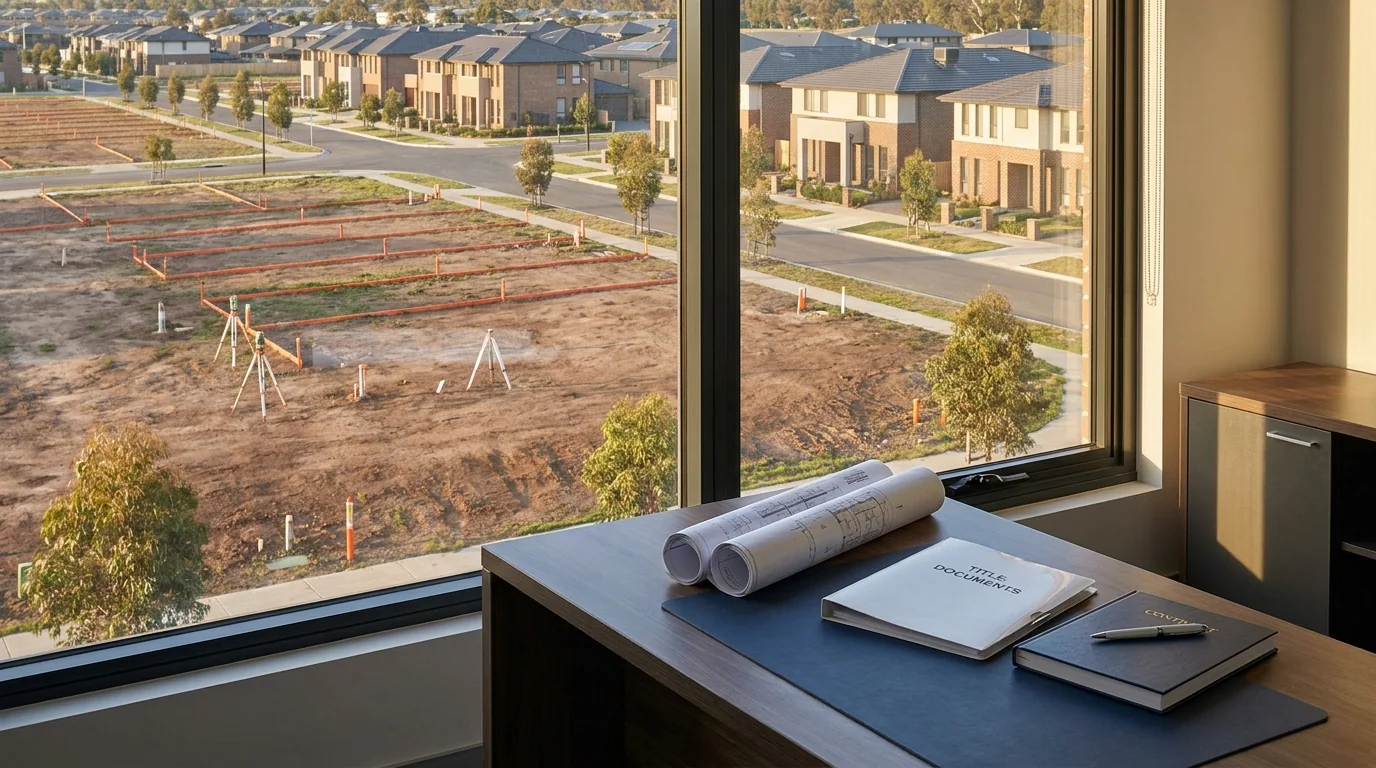
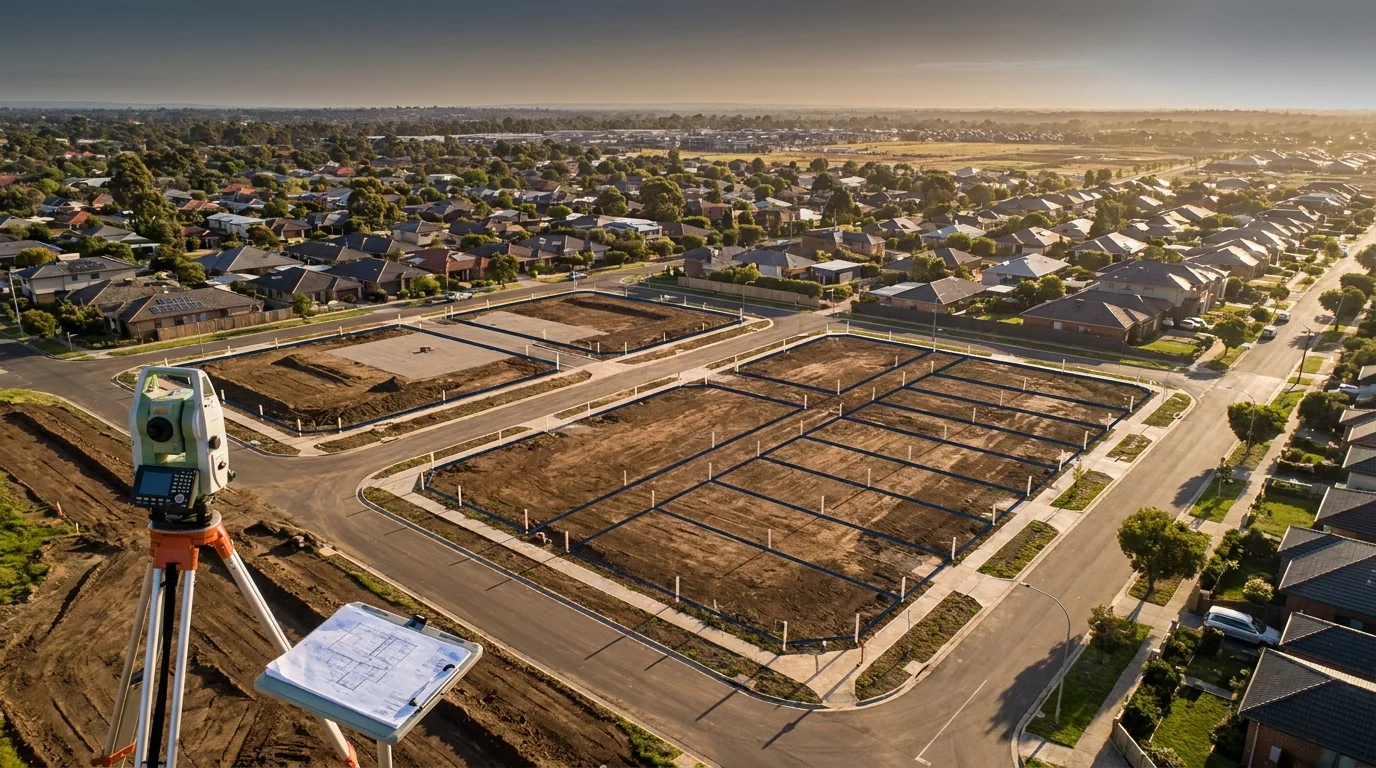
Building a second dwelling on an existing lot is a common strategy for Victorian property investors and homeowners. While the design and construction phases are visible, the legal process for dual occupancy subdivision is what actually secures the financial return. Without separate titles, you cannot sell the new home independently or refinance the dwellings as individual assets. This process involves specific Victorian legislation, council requirements, and the coordination of several professionals.
The Legal Framework for Victorian Subdivisions
Two primary pieces of legislation govern land development in Melbourne and regional Victoria. The Planning and Environment Act 1987 dictates how land can be used and what can be built. The Subdivision Act 1988 controls the actual carving up of the land into separate titles. Most developers begin by seeking a planning permit from their local council. This permit usually covers both the development (the buildings) and the subdivision (the new boundaries).
The Victorian government has introduced fast-tracked assessments for specific residential projects. These changes aim to reduce the time spent in the planning system for simple two-dwelling projects on a single lot. Even with faster planning approvals, the legal requirements for registering the subdivision remain strict.
Starting with a Title Audit
We always recommend a thorough audit of the current Certificate of Title before committing to a project. Several legal encumbrances can prevent a dual occupancy from proceeding. Restrictive covenants are a common hurdle. These are private agreements between landowners that might limit the number of dwellings on a lot to one. If your title has a "single dwelling" covenant, you cannot build a dual occupancy until that covenant is removed or varied. In some cases, restrictive covenants can be challenged in the Supreme Court of Victoria if they no longer serve a clear purpose.
You must also check for easements. These are strips of land reserved for services like drainage, sewerage, or electricity. Building over an easement requires consent from the relevant water or power authority. If an easement sits right where you planned your second driveway or the building footprint, it may require a total redesign of the project.
The Role of the Land Surveyor and SPEAR
Once you have a planning permit, your licensed land surveyor prepares a Plan of Subdivision. This document shows the new boundaries, any common property, and the location of easements. In Victoria, this is managed through the Surveying and Planning through Electronic Applications and Referrals system, known as SPEAR. This system allows surveyors, lawyers, and councils to process applications online.
As property development lawyers, we use SPEAR to track the progress of the subdivision and prepare the necessary legal documents. The surveyor handles the technical measurements, while we manage the legal compliance and the requirements of your bank or lender. Coordination between these parties is necessary to avoid delays in the final stages of the project.
Managing Section 173 Agreements
Many planning permits for dual occupancy include a condition requiring a Section 173 agreement. This is a contract between the landowner and the council, recorded on the property title under the Planning and Environment Act 1987. These agreements often mandate that the development must follow the approved plans or specify how common property must be maintained.
Negotiating and drafting Section 173 agreements is a standard part of our work. These documents stay with the land, meaning they bind future owners. It is important to get these drafted and signed early in the process, as council will not issue a Statement of Compliance until the agreement is registered on the title.
The Path to Statement of Compliance
The Statement of Compliance is the final approval from the council. It confirms that all conditions of the planning permit have been met. To get this, you must show that:
- All required infrastructure, such as drainage and telecommunications, is connected.
- Any required contributions or fees have been paid to the council.
- All referral authorities, such as Melbourne Water or United Energy, have given their consent.
- Any required Section 173 agreements are signed and ready for registration.
Council will not issue this document until every box is checked. This is often where projects stall. We work with your surveyor to follow up with authorities and ensure all consents are uploaded to SPEAR as quickly as possible.
Registration and New Titles
After the council issues the Statement of Compliance, the final step is lodgement at Land Use Victoria. We submit the Plan of Subdivision along with the Statement of Compliance and any necessary bank consents. If you have a mortgage, your bank must "produce" the title to Land Use Victoria to allow the subdivision to be registered. This requires specific forms and can take several weeks depending on the lender's internal processes.
Once Land Use Victoria processes the application, the old title is cancelled and two new titles are issued. At this point, the dual occupancy subdivision is legally complete. You now own two separate pieces of real estate.
Off-the-Plan Sales and Contracts
Many developers choose to sell the second dwelling while construction is still underway. This is known as an off-the-plan sale. In Victoria, these contracts are subject to strict rules under the Sale of Land Act 1962. The contract must include a copy of the proposed Plan of Subdivision and inform the buyer that the plan has not yet been registered.
Selling off-the-plan allows you to secure buyers early, but you must be careful with sunset clauses. A sunset clause provides a date by which the plan of subdivision must be registered. If it is not registered by this date, the buyer has the right to rescind the contract. Under the Sale of Land Act, a vendor can only rescind a contract under a sunset clause if they obtain the written consent of the purchaser or an order from the Supreme Court. Managing the legal process for dual occupancy subdivision efficiently is essential to meet these deadlines and ensure the contract remains secure.
Common Pitfalls to Avoid
Delays in subdivision often stem from poor communication or missing documents. A common mistake is waiting until construction is finished to start the subdivision paperwork. You can often start the subdivision process as soon as the planning permit is issued. This allows the legal work to run in the background while the builder is on site.
Another issue is failing to account for the Owners Corporation. If your dual occupancy shares common property, such as a shared driveway or a common garden, you must set up an Owners Corporation. This requires a schedule of lot entitlements and liabilities. The surveyor prepares this schedule, but we ensure it aligns with your long-term goals for the property, especially regarding insurance and maintenance costs.
Every council in Melbourne has different internal policies. Some are faster than others at processing SPEAR applications. Having a subdivision lawyer Melbourne-based who knows these local variations helps in setting realistic expectations for your project timeline. We focus on moving the application through the system without unnecessary pauses.
This information is general in nature. Contact us for advice specific to your project.