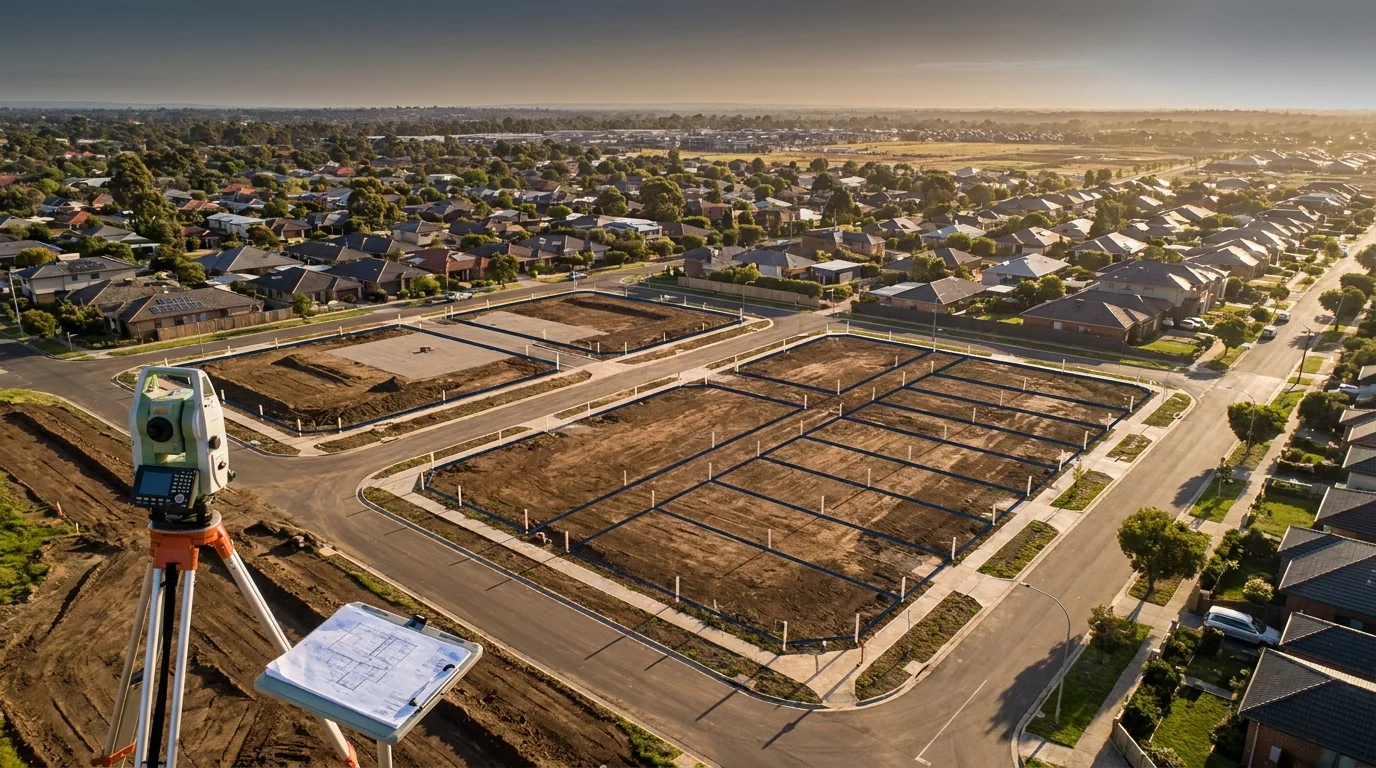
The Planning Amendment (Better Decisions Made Faster) Act 2026 has introduced significant changes that property developers and landowners must navigate. For those active in property development law, these legislative updates represent a shift in the relationship between landowners and the state. If you are a homeowner in Melbourne planning a backyard subdivision or a developer managing a multi-unit site, these changes to compensation rules will impact your project feasibility.
Subdividing land in Victoria is rarely a straight line. It involves a sequence of approvals from the initial planning permit through to the final lodgement of the plan of subdivision at Land Use Victoria. Along the way, you may encounter planning permit conditions that limit what you can build or where you can build it. Sometimes, these limitations give rise to a right to compensation. The new legislation seeks to tighten the rules around when and how you can claim those funds.
The Current State of Planning Compensation
Under the Planning and Environment Act 1987, landowners can claim compensation if their land is reserved for a public purpose. This typically occurs when a Public Acquisition Overlay (PAO) is placed over a property. A PAO signals that a government authority, such as the Department of Transport or a local council, intends to acquire the land in the future for a road, park, or school.
A right to compensation generally arises in two main ways. The first is a permit refusal. This happens when a council knocks back your application for a subdivision or development because the land is needed for that public purpose. The second is a loss on sale. If you sell your property for less than its market value because the buyer knows a portion of the land will eventually be taken by the government, you can claim the difference.
This system protects landowners from losing value when the government reserves their land. However, the legislation introduces several hurdles that will make these claims more technical and potentially more difficult to win without specific legal oversight.
Key Changes in the 2026 Act
The Planning Amendment (Better Decisions Made Faster) Act 2026 introduces several amendments to the Planning and Environment Act 1987 and the Land Acquisition and Compensation Act 1986. The primary goal of the government is to speed up decision-making, but for landowners, the reality may involve more administrative requirements.
Financial Loss Criteria
The legislation tightens the criteria for financial loss in several sections of the Act. While this might seem like a minor linguistic change, it has significant legal weight. It suggests that the Victorian Government wants to move away from theoretical or speculative loss assessments. Claimants will likely need to provide concrete evidence of money lost, rather than relying on broader economic valuations. This makes the role of your subdivision lawyer in Melbourne even more important when preparing a claim.
Requests for Further Information
Updated procedures allow a compensating authority to request more information from a landowner before they respond to a claim. Importantly, such requests can suspend the statutory timeframe for the authority to make a decision. This mirrors the process often seen with planning permit applications where councils use "requests for further information" to stop the clock. For a developer waiting on a payout to fund their next project, these delays can be costly.
Principal Place of Residence Limitations
There is also a focus on provisions dealing with increased compensation for the effect on a residence. The legislation includes measures to limit certain types of extra compensation to cases where the land is the claimant’s principal place of residence. If you are a developer holding land in a company name or a trust, you may find your ability to claim certain types of "solatium" or emotional distress compensation is restricted. The valuation will also be tied to the existing residential use, which may not reflect the development potential of the site.
How This Affects Your Subdivision Strategy
When you start a project, your surveyor and town planner focus on the site layout and council requirements. As lawyers, we focus on the title and the legal obligations that follow the land. Many subdivisions involve Section 173 agreements, which can complicate compensation claims if they contain clauses that waive certain rights or impose specific development obligations.
If you are looking at a block with a Public Acquisition Overlay, you must factor in the updated loss requirements. You cannot simply assume that the presence of the overlay guarantees a high payout. The implementation of land use agreements and compensation frameworks is becoming increasingly complex. This complexity is reflected in the updated legislation.
Additionally, the choice of subdivision type matters. Whether you are pursuing a subdivision without common property or one that involves an owners corporation, the way your land is valued and the way a PAO affects different lots can vary. A PAO that only affects a common property driveway is a different legal problem than one that cuts through a proposed building envelope on a primary lot.
The Impact of Market Trends
The timing of these changes coincides with a shift in the Victorian building sector. Data from recent building approval data indicates fluctuations in the number of private sector dwellings being approved. As the market changes, the government is looking to reduce its financial exposure to compensation claims while trying to accelerate the delivery of infrastructure.
For a developer, this means you need to be more proactive. You should not wait until a permit is refused to consider your compensation strategy. If you are purchasing a site for a townhouse development, a thorough review of the planning scheme and any proposed amendments is necessary. We often see clients who discover a proposed reservation only after they have paid a deposit. By then, their options are limited.
Managing the SPEAR and Registration Process
While the legislation focuses on compensation, the mechanics of getting your titles registered remain the same. We work with your surveyor through the SPEAR system to manage the plan of subdivision. If a compensation claim is active, it must be handled in parallel with your application for a Statement of Compliance. You do not want a dispute over compensation to hold up the registration of your new titles.
If your project involves a mortgage, you will also need to manage bank consents and SPEAR applications. Lenders are often sensitive to anything that affects the value of their security, such as a Public Acquisition Overlay or a pending compensation claim. We coordinate with your bank to ensure they understand the legal status of the land and provide the necessary consents for the plan to proceed to lodgement.
Practical Advice for Landowners
The Planning Amendment (Better Decisions Made Faster) Act 2026 is now in effect, and it signals the government's intent to tighten compensation criteria. If you own land that is subject to a PAO or a proposed reservation, consider the following steps:
- Review your holding structure: If the land is not your principal place of residence, recognise that your compensation rights may be more limited under the new rules.
- Document everything: Because the legislation emphasises proven loss, keep detailed records of all costs associated with permit applications, site works, and financing.
- Engage early: Talk to your surveyor and lawyer before you file a claim. A poorly timed claim can lead to an immediate request for information, stalling your progress.
- Assess the valuation: Understand that valuations for compensation purposes are different from market appraisals for a sale. They are governed by the Land Acquisition and Compensation Act 1986.
The Victorian planning system is designed to facilitate development, but it also contains traps for the unwary. The new Act adds another layer of regulation to an already dense legal area. Our role is to help you manage these changes so you can focus on the construction and sale of your project. We handle the interaction with councils and authorities to ensure your rights are protected under the Subdivision Act 1988 and the Planning and Environment Act 1987.
This information is general in nature. Contact us for advice specific to your project.